
Developing an Entrepreneurial Mindset: Keys to Success
Developing an entrepreneurial mindset involves cultivating a proactive attitude and embracing calculated risks. It requires constant learning and adaptability.
An entrepreneurial mindset is crucial for success in today’s fast-paced business environment. Entrepreneurs think differently; they see opportunities where others see challenges. This mindset is not just for business owners but for anyone looking to innovate and excel. It involves being proactive, taking calculated risks, and continuously learning from experiences.
A strong entrepreneurial mindset fosters creativity, resilience, and adaptability. By developing this mindset, you can better navigate uncertainties and drive growth. Whether starting a new venture or improving existing processes, an entrepreneurial mindset can be a game-changer.
Embracing Risk
Developing an entrepreneurial mindset means embracing risk. Entrepreneurs face uncertainty and challenges. They see opportunities where others see obstacles. This section explores how to become comfortable with risk.
Comfort With Uncertainty
Entrepreneurs thrive in uncertain environments. They understand that risk is part of the journey. Comfort with uncertainty means being ready for surprises. This mindset helps them make decisions quickly. It allows them to adapt to new situations. Here are some ways to build comfort with uncertainty:
- Stay informed: Keep up with industry trends.
- Build a network: Connect with experienced mentors.
- Practice mindfulness: Stay calm under pressure.
By following these steps, entrepreneurs can navigate uncertainty better.
Learning From Failure
Failure is a part of the entrepreneurial journey. Successful entrepreneurs learn from their mistakes. They see failure as a learning opportunity. Here are some strategies to learn from failure:
- Analyze the failure: Understand what went wrong.
- Gather feedback: Seek input from peers and mentors.
- Make adjustments: Implement changes to avoid repeating mistakes.
Learning from failure helps entrepreneurs grow. It builds resilience and improves decision-making skills. By embracing risk and learning from mistakes, entrepreneurs become better leaders.
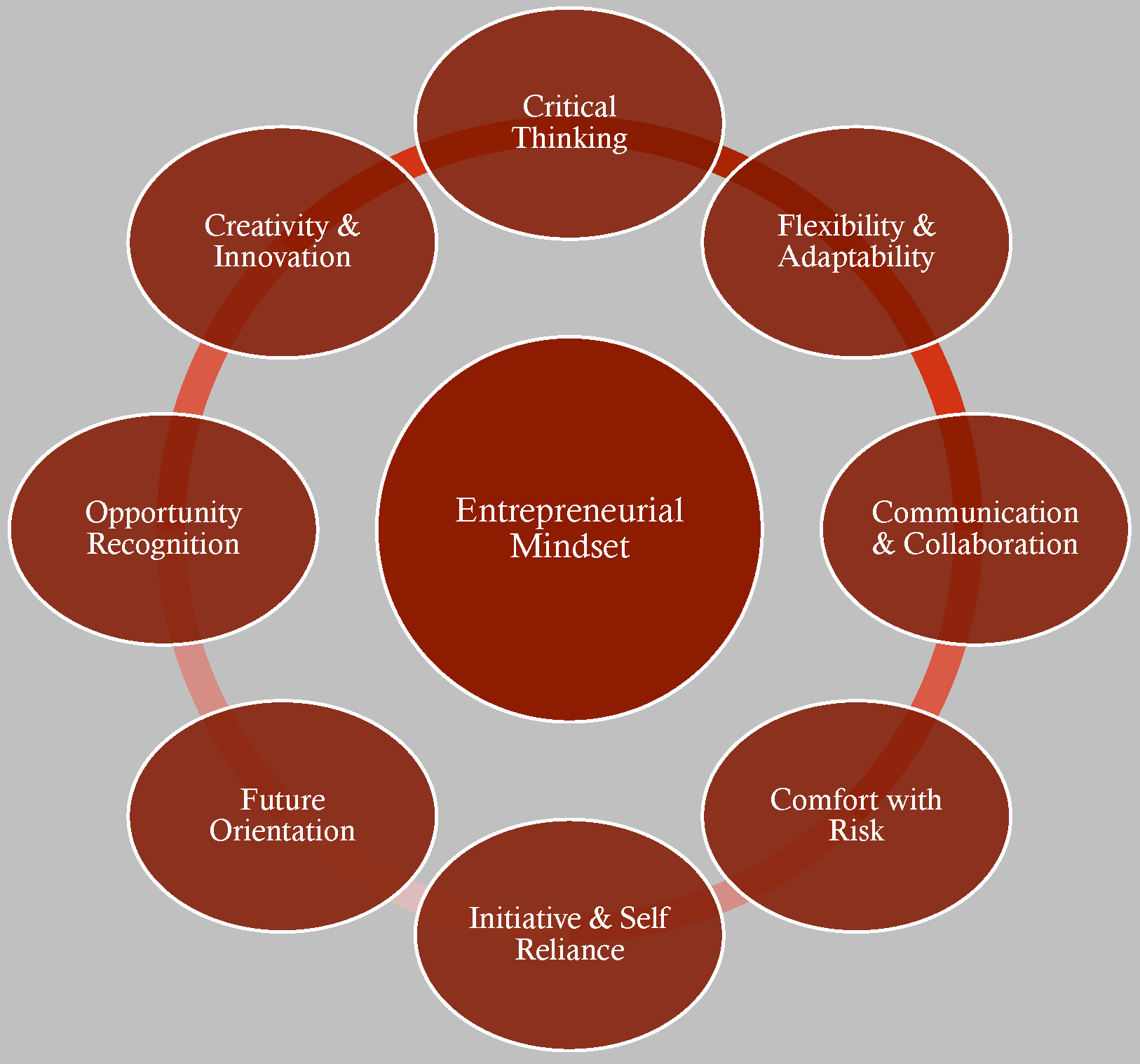
Credit: www.csuchico.edu
Cultivating Creativity
Developing an entrepreneurial mindset requires nurturing creativity. Entrepreneurs face challenges that demand innovative solutions. Cultivating creativity helps entrepreneurs stay ahead and find unique opportunities.
Thinking Outside The Box
Creative entrepreneurs think outside the box. They explore new ideas and perspectives. They avoid conventional paths and seek unique solutions.
- Embrace diverse experiences
- Challenge existing norms
- Encourage brainstorming sessions
Innovative Problem-solving
Entrepreneurs often face complex problems. Innovative problem-solving is crucial. Creative thinkers find effective, efficient solutions.
| Method | Benefit |
|---|---|
| Mind Mapping | Visualizes connections and ideas |
| SWOT Analysis | Identifies strengths and weaknesses |
| Prototyping | Tests ideas quickly |
- Identify the problem clearly
- Gather all possible solutions
- Evaluate each solution
- Implement the best solution
- Review the outcome
Building Resilience
Developing an entrepreneurial mindset requires resilience. Resilience is the ability to bounce back from setbacks and maintain motivation. Building resilience is crucial for entrepreneurs facing constant challenges.
Overcoming Setbacks
Setbacks are inevitable in entrepreneurship. To overcome setbacks, adopt a positive mindset. View challenges as opportunities to learn and grow.
- Stay Positive: Focus on solutions, not problems.
- Seek Support: Surround yourself with supportive people.
- Learn from Mistakes: Analyze what went wrong and improve.
Successful entrepreneurs see setbacks as temporary. They do not let failures define them. This mindset helps them recover quickly and move forward.
Maintaining Motivation
Motivation can wane during tough times. To maintain motivation, set clear goals and celebrate small wins.
- Set Clear Goals: Define what you want to achieve.
- Break Goals into Smaller Tasks: Make goals manageable.
- Celebrate Achievements: Acknowledge every milestone.
Motivation is like fuel for your entrepreneurial journey. Keeping your motivation high helps you stay focused and driven.
| Strategy | Benefit |
|---|---|
| Stay Positive | Improves problem-solving |
| Seek Support | Provides emotional strength |
| Learn from Mistakes | Enhances skills |
| Set Clear Goals | Gives direction |
| Break Goals into Smaller Tasks | Makes goals achievable |
| Celebrate Achievements | Boosts morale |
Building resilience through overcoming setbacks and maintaining motivation is essential. It ensures long-term success in your entrepreneurial journey.
Networking Skills
Developing an entrepreneurial mindset requires sharp networking skills. Building and leveraging connections can significantly impact your business growth. Networking helps you meet new people, share ideas, and create opportunities.
Building Relationships
Building relationships is crucial for any entrepreneur. It’s about creating meaningful connections. Follow these tips for effective relationship building:
- Listen actively: Pay attention to others and show genuine interest.
- Be genuine: Authenticity builds trust and lasting connections.
- Offer value: Share helpful information or support when you can.
Strong relationships can lead to valuable business opportunities. They also provide support and insights for your entrepreneurial journey.
Leveraging Connections
Leveraging connections means using your network to create new opportunities. Here’s how you can make the most of your connections:
- Ask for introductions: Use your network to meet new people.
- Collaborate: Work with your connections on projects or ventures.
- Seek advice: Get insights and feedback from experienced contacts.
Successful entrepreneurs know how to leverage their network effectively. It helps them grow their business and expand their reach.
Financial Acumen
Developing an entrepreneurial mindset requires strong financial acumen. This means understanding and managing your finances well. It’s a key skill for every entrepreneur. Two crucial aspects of financial acumen are budget management and investment strategies.
Budget Management
Budget management involves planning and controlling your finances. Keep track of your income and expenses. This helps in allocating funds wisely. Always have a clear budget plan. It can help avoid unnecessary costs.
- List all sources of income.
- Track every expense.
- Allocate funds for essential needs.
- Save a portion for emergencies.
Investment Strategies
Investment strategies are about making your money grow. This can be through stocks, bonds, or other ventures. The goal is to get a return on your investment. Understand the risks involved.
- Research different investment options.
- Understand the risk and return of each option.
- Diversify your investments to spread risk.
- Monitor your investments regularly.
Investment strategies can be complex. Start with small investments. Learn and grow your portfolio gradually.
Financial Acumen Summary
| Aspect | Key Actions |
|---|---|
| Budget Management |
|
| Investment Strategies |
|
Time Management
Time management is crucial for entrepreneurs. It helps in maximizing productivity and achieving goals efficiently. Managing time effectively can lead to better decision-making and stress reduction.
Prioritizing Tasks
Prioritizing tasks is essential for effective time management. Identify your most important tasks first. Use the Eisenhower Matrix to categorize tasks:
| Urgent | Not Urgent | |
|---|---|---|
| Important | Do Now | Plan to Do |
| Not Important | Delegate | Eliminate |
This matrix helps you decide what to focus on. It reduces time spent on unimportant tasks. Always tackle high-priority tasks first.
Avoiding Procrastination
Procrastination can derail your progress. Develop strategies to avoid it:
- Set clear goals
- Break tasks into smaller steps
- Use a timer for focused work sessions
- Eliminate distractions
Use the Pomodoro Technique for focused work:
- Work for 25 minutes
- Take a 5-minute break
- Repeat four times
- Take a longer break
These methods can help you stay on track. Avoiding procrastination boosts productivity and ensures timely task completion.
Continuous Learning
Developing an entrepreneurial mindset involves embracing continuous learning. Entrepreneurs must always seek new knowledge. This approach helps them stay ahead in their field.
Staying Updated
Staying updated with industry trends is vital. Entrepreneurs should read relevant articles and books. They should follow industry leaders on social media. Attending conferences and webinars can provide valuable insights. Subscribing to newsletters also helps keep up with trends.
Skill Development
Developing new skills keeps entrepreneurs competitive. They should regularly take online courses. Learning new software tools can boost efficiency. Practicing critical thinking and problem-solving is essential. Joining workshops and bootcamps can enhance specific skills.
| Skill | Development Method |
|---|---|
| Critical Thinking | Online Courses, Books |
| Software Tools | Workshops, Tutorials |
| Problem-Solving | Bootcamps, Practice Sessions |
Continuous learning is the key to success. Entrepreneurs who learn constantly achieve more. They adapt better to changes and challenges.

Credit: engineeringmanagementinstitute.org
Vision And Goal Setting
Developing an entrepreneurial mindset starts with having a clear vision and setting achievable goals. Vision and goal setting are foundational elements that propel entrepreneurs towards success. They provide direction and a roadmap for future endeavors. Let’s dive into the essential components of vision and goal setting.
Defining Success
Defining success is the first step in vision and goal setting. Each entrepreneur must have a personal definition of what success means. Success can mean different things to different people. For some, it’s financial freedom; for others, it’s creating a positive impact.
To define success, ask yourself these questions:
- What do I want to achieve?
- What motivates me every day?
- What legacy do I want to leave?
Write down your answers and keep them visible. This will remind you of your goals and keep you focused.
Creating Action Plans
Creating action plans is crucial for achieving your goals. An action plan breaks down your vision into manageable steps. This makes big goals seem less daunting and more achievable.
Here’s how to create an effective action plan:
- Identify your main goal: What is the ultimate objective you want to achieve?
- Break it down: Divide the main goal into smaller, actionable steps.
- Set deadlines: Assign a deadline for each step to maintain momentum.
- Track progress: Regularly review your progress and adjust your plan as needed.
Here’s an example action plan table:
| Task | Deadline | Status |
|---|---|---|
| Research market trends | October 20 | Pending |
| Create a business model | November 5 | In progress |
| Launch product | December 1 | Not started |
With a clear vision and a detailed action plan, you can achieve your entrepreneurial goals. Stay focused, stay motivated, and keep your eyes on your vision.

Credit: drexel.edu
Frequently Asked Questions
What Is The 5 Entrepreneurial Mindset?
The 5 entrepreneurial mindsets are innovation, risk-taking, resilience, adaptability, and vision. Entrepreneurs embrace new ideas, take calculated risks, stay resilient through challenges, adapt quickly to changes, and maintain a clear vision for their goals. These traits drive success and growth in business ventures.
What Are The 3 C’s Of Entrepreneurial Mindset?
The 3 C’s of an entrepreneurial mindset are Curiosity, Creativity, and Commitment. Curiosity drives exploration and learning. Creativity fosters innovative solutions. Commitment ensures perseverance and dedication. These traits help entrepreneurs navigate challenges and seize opportunities effectively.
How Can You Develop The Entrepreneurial Mindset Of Employees?
Encourage creativity, provide continuous learning opportunities, support risk-taking, foster collaboration, and recognize innovative efforts. This nurtures an entrepreneurial mindset.
How Do You Develop A Business Mindset?
Develop a business mindset by setting clear goals, learning continuously, embracing challenges, networking, and staying disciplined.
Conclusion
Cultivating an entrepreneurial mindset is essential for success. Embrace challenges, learn continuously, and stay adaptable. These traits will drive innovation and growth. Begin your journey today, and watch your entrepreneurial dreams come to life. With determination and the right mindset, the possibilities are limitless.
Start developing your entrepreneurial mindset now!