
Overcoming Common Startup Challenges: Proven Strategies for Success
Overcoming common startup challenges requires clear goals and a resilient mindset. Effective planning and adaptability are crucial for success.
Startups face numerous hurdles that can impede growth. Entrepreneurs often struggle with securing funding, building a customer base, and managing resources efficiently. The pressure to innovate and stay competitive adds to these challenges. Yet, with clear goals, strategic planning, and a resilient mindset, startups can navigate these obstacles effectively.
Networking and seeking mentorship can provide valuable insights and support. Focus on building a strong team and fostering a culture of adaptability. By addressing these common issues proactively, startups can increase their chances of long-term success and sustainability in the competitive business landscape.
Identifying Market Needs
One of the biggest challenges for startups is understanding market needs. You must know what customers want. Without this, your startup may fail. Identifying market needs involves research and analysis. Below are key steps to help you.
Conducting Market Research
Market research helps you understand your target audience. It involves collecting data about potential customers. Use surveys, interviews, and focus groups. Ask questions about their needs, preferences, and problems.
- Surveys: Create online surveys with specific questions.
- Interviews: Conduct one-on-one interviews for deeper insights.
- Focus Groups: Gather small groups for discussion.
Analyze the data to find common patterns. This helps you understand market needs better.
Analyzing Competitor Landscape
Competitor analysis helps you understand your market position. Identify your main competitors. Study their products, services, and marketing strategies. Create a table to organize your findings.
| Competitor | Products/Services | Strengths | Weaknesses |
|---|---|---|---|
| Competitor A | Product X, Service Y | Strong brand, Good customer support | High prices, Limited features |
| Competitor B | Product Z, Service W | Affordable, Wide range of features | Poor customer support, Limited availability |
Understanding competitors’ strengths and weaknesses helps you improve your offerings. You can fill gaps in the market and attract more customers.
Building A Strong Team
Building a strong team is crucial for any startup’s success. A dedicated and talented team can drive your startup to new heights. This section will focus on the key aspects of building a strong team.
Hiring Top Talent
Hiring top talent is the first step in building a strong team. Look for candidates who not only have the required skills but also fit your company’s culture.
- Define the role clearly: Be specific about the skills and experience needed.
- Use multiple channels: Post job openings on various platforms like LinkedIn, job boards, and social media.
- Screen effectively: Use assessments and interviews to gauge both technical and cultural fit.
Offering competitive salaries and benefits can attract top talent. You can also consider offering stock options to make your startup more appealing.
Fostering A Positive Culture
A positive culture keeps your team motivated and engaged. It helps in retaining talent and improving productivity.
- Encourage open communication: Create an environment where team members can share ideas freely.
- Recognize achievements: Celebrate both small and big wins to keep morale high.
- Offer growth opportunities: Provide training and development programs to help employees grow.
Work-life balance is also important. Encourage breaks and flexible working hours. A happy team is a productive team.
Lastly, lead by example. Show the values and behaviors you want in your team.
| Aspect | Action |
|---|---|
| Hiring Top Talent | Define roles, use multiple channels, screen effectively |
| Fostering a Positive Culture | Encourage communication, recognize achievements, offer growth |
Securing Funding
One of the biggest challenges for startups is securing funding. Without funds, even the best ideas can fail. This section will cover key strategies to overcome this hurdle.
Exploring Funding Options
There are various ways to secure funding for your startup. Each option has its pros and cons.
- Angel Investors: These are wealthy individuals who invest in startups. They often provide valuable mentorship.
- Venture Capitalists: Firms that invest in startups with high growth potential. They usually require equity in exchange for funding.
- Bootstrapping: Using your own savings to fund your startup. This keeps you in full control of your business.
- Crowdfunding: Raising small amounts of money from a large number of people. This can also help you gauge market interest.
| Funding Option | Pros | Cons |
|---|---|---|
| Angel Investors | Expertise, Mentorship | Equity Loss |
| Venture Capitalists | Large Funds, Network | Equity Loss, Pressure |
| Bootstrapping | Full Control | Limited Funds |
| Crowdfunding | Market Validation | Time-Consuming |
Preparing A Pitch Deck
A well-prepared pitch deck is crucial for attracting investors. It provides a snapshot of your business.
- Cover Slide: Include your company name and logo.
- Problem Statement: Clearly define the problem your startup solves.
- Solution: Present your unique solution.
- Market Size: Show the potential market for your product.
- Business Model: Explain how you will make money.
- Traction: Highlight key milestones and achievements.
- Financials: Provide financial projections and funding needs.
- Team: Introduce your team and their expertise.
Each slide should be clear and concise. Use visuals to support your points. Keep the total deck under 20 slides.

Credit: www.linkedin.com
Creating A Business Plan
Creating a business plan is essential for any startup. It acts as a roadmap, guiding the company’s growth and operations. A well-crafted business plan helps you stay focused and organized. Here, we will explore how to define business goals and set milestones.
Defining Business Goals
Defining business goals is the first step in your business plan. These goals should be specific, measurable, and achievable. Start by asking yourself what you want to achieve.
- Increase customer base
- Boost sales
- Expand market reach
Make a list of your goals and prioritize them. Focus on the most important goals first. Clear goals make it easier to track your progress. They also help in decision-making. Without clear goals, your business may lose direction.
Setting Milestones
Setting milestones helps you measure progress. Milestones are smaller, achievable steps toward your larger goals. They keep you motivated and on track. Here are some tips for setting effective milestones:
- Break down your goals into smaller tasks
- Set a timeline for each milestone
- Regularly review and adjust your milestones
For example, if your goal is to increase sales, your milestones might include:
| Milestone | Timeline |
|---|---|
| Launch a marketing campaign | 3 months |
| Hire a sales team | 6 months |
| Reach 1000 customers | 12 months |
Setting clear milestones keeps you focused. It also makes it easier to celebrate small wins. This boosts morale and keeps your team motivated.
Product Development
Product development can be a tough journey for startups. Many challenges arise when creating a new product. This section explores key steps to overcome these hurdles. Prototyping, testing, and incorporating user feedback are crucial.
Prototyping And Testing
Prototyping is the first step in bringing your idea to life. A prototype is a basic version of your product. It helps you understand how the product will look and work.
Testing this prototype is essential. Testing helps identify any issues early. It saves time and money in the long run.
- Identify key features to include in the prototype.
- Use cost-effective materials for initial prototypes.
- Test functionality with a small group of users.
Incorporating User Feedback
User feedback is gold for any startup. It provides insights on what works and what doesn’t. Gathering this feedback helps refine your product.
Use various methods to collect feedback:
- Surveys: Quick and easy way to gather opinions.
- Interviews: In-depth understanding of user experiences.
- Usability tests: Observe how users interact with the product.
After gathering feedback, make necessary adjustments. Focus on improving the user experience. Iterate and keep testing until the product meets user needs.

Credit: fastercapital.com
Marketing And Sales
Marketing and sales are vital for any startup. They help attract customers and drive revenue. Many startups face challenges in these areas, but with the right strategies, these challenges can be overcome.
Building A Brand
Creating a strong brand is essential for a startup’s success. A brand is more than a logo or name. It’s the overall perception of your business in the minds of consumers. Here are some key steps to build a strong brand:
- Define your brand: Identify what makes your startup unique. Understand your target audience and their needs.
- Create a logo and tagline: These should reflect your brand’s identity and values.
- Develop a consistent voice: Use the same tone and style across all channels. This includes social media, website, and marketing materials.
Consistency is key in brand building. Ensure that your brand message is clear and consistent across all platforms.
Implementing Sales Strategies
Effective sales strategies are crucial to converting leads into customers. Here are some strategies to consider:
- Identify your sales funnel: Understand the journey your customers take from awareness to purchase.
- Train your sales team: Equip your team with the necessary skills and knowledge. Provide regular training and support.
- Utilize CRM tools: Customer Relationship Management (CRM) tools help manage customer interactions and data. They can improve customer satisfaction and retention.
Monitoring and analyzing sales data can help improve your strategies. Use insights to make informed decisions and optimize your sales process.
| Sales Strategy | Description |
|---|---|
| Identify Sales Funnel | Map out customer journey from awareness to purchase. |
| Train Sales Team | Provide skills and knowledge to handle sales effectively. |
| Use CRM Tools | Manage customer interactions and improve retention. |
Managing Finances
Managing finances is crucial for every startup. Proper financial management ensures your startup can grow and succeed. This section will cover key areas like budgeting, forecasting, and tracking financial performance.
Budgeting And Forecasting
A strong budget helps control your expenses. It guides your spending and keeps your startup on track. Forecasting helps predict future financial needs. This allows you to plan for growth and avoid surprises.
| Steps | Details |
|---|---|
| 1. List Expenses | Identify all costs, both fixed and variable. |
| 2. Estimate Income | Predict monthly revenue based on sales and other sources. |
| 3. Create a Budget | Allocate funds to each expense category. |
| 4. Monitor Regularly | Review and adjust the budget as needed. |
Tracking Financial Performance
Tracking financial performance helps you understand your startup’s health. Regular monitoring ensures you stay on top of your finances. This includes tracking revenue, expenses, and profits.
- Revenue: Track sales and other income sources.
- Expenses: Keep a record of all expenditures.
- Profits: Calculate net income by subtracting expenses from revenue.
Using financial software can make tracking easier. It automates many tasks and provides accurate reports. This ensures you always have a clear picture of your startup’s finances.
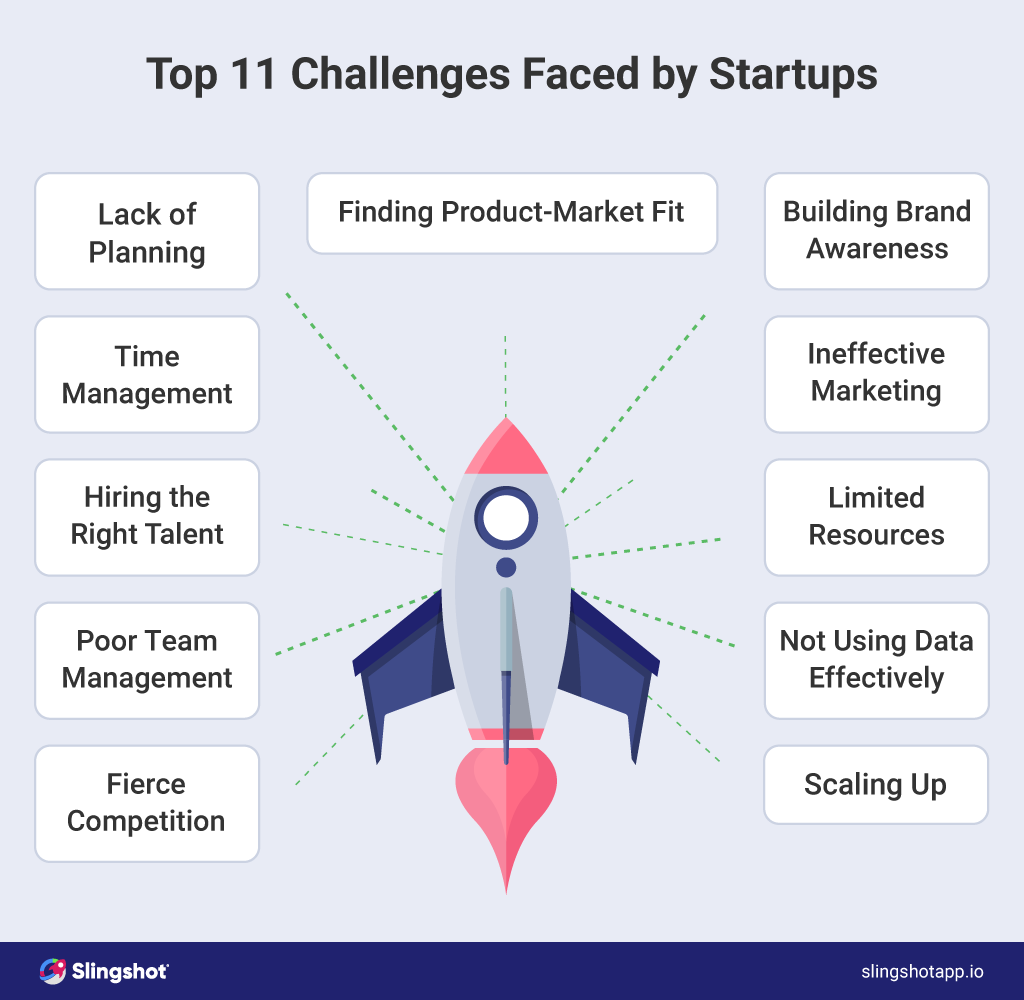
Credit: www.slingshotapp.io
Scaling The Business
Starting a business is challenging, but scaling it can be even tougher. Many startups face obstacles while trying to grow. Let’s explore some key areas to focus on during this phase.
Expanding Operations
Expanding operations means increasing your business activities. This can involve hiring more staff or increasing production. It’s crucial to maintain quality during this growth. Here are some tips:
- Hire skilled employees who fit your company culture.
- Invest in training and development programs.
- Upgrade your technology to handle increased demand.
Keeping a close eye on operational efficiency is vital. Monitor your key performance indicators (KPIs) to ensure productivity. Use data analytics to make informed decisions.
Entering New Markets
Entering new markets can significantly boost your business. This involves offering your products or services in new regions. Consider the following steps:
- Conduct thorough market research to understand the new market.
- Adapt your marketing strategy to suit local preferences.
- Build partnerships with local businesses for better reach.
Understanding the local culture and consumer behavior is essential. Tailoring your approach can make a big difference. Use localization strategies to connect with new customers.
Here’s a quick comparison of expanding operations and entering new markets:
| Aspect | Expanding Operations | Entering New Markets |
|---|---|---|
| Focus | Increase internal capabilities | Expand geographical reach |
| Approach | Hire, train, upgrade | Research, adapt, partner |
| Challenges | Maintain quality, efficiency | Understand local culture |
Both strategies come with their own set of challenges. By focusing on these key areas, startups can navigate the complexities of scaling.
Frequently Asked Questions
What Is A Common Challenge Faced By Startups?
A common challenge faced by startups is securing adequate funding. Many struggle to attract investors and manage cash flow.
What Are 4 Mistakes Startups Typically Make?
Startups often make these mistakes: insufficient market research, poor financial management, ignoring customer feedback, and weak marketing strategies.
What Do Startups Struggle With Most?
Startups often struggle with securing funding, attracting customers, and managing cash flow. They also face challenges in building a strong team and scaling operations. Effective marketing and competitive differentiation are critical hurdles as well.
What Is The #1 Reason Why Startups Fail?
The #1 reason startups fail is a lack of market need. Entrepreneurs often create products without sufficient demand. This leads to financial losses and business closure. Proper market research can help avoid this pitfall.
Conclusion
Navigating startup challenges is crucial for success. With perseverance and smart strategies, founders can overcome obstacles. Focus on clear goals, resilient leadership, and continuous learning. These elements are vital for growth. Embrace the journey and stay adaptable. Your startup can achieve long-term success by tackling these common challenges effectively.