Business SWOT Analysis Made Simple: A Beginner’s Guide
SWOT analysis simplifies business planning. It identifies strengths, weaknesses, opportunities, and threats.
A SWOT analysis is a strategic tool that helps businesses understand their internal and external environments. It provides a clear framework for evaluating a company’s strengths, weaknesses, opportunities, and threats. This analysis aids in decision-making, strategic planning, and identifying areas for improvement.
Businesses can leverage their strengths and opportunities while mitigating weaknesses and threats. SWOT analysis is easy to conduct and offers valuable insights. It helps businesses stay competitive and achieve long-term success. By regularly performing SWOT analysis, companies can adapt to changes and remain agile in the market.
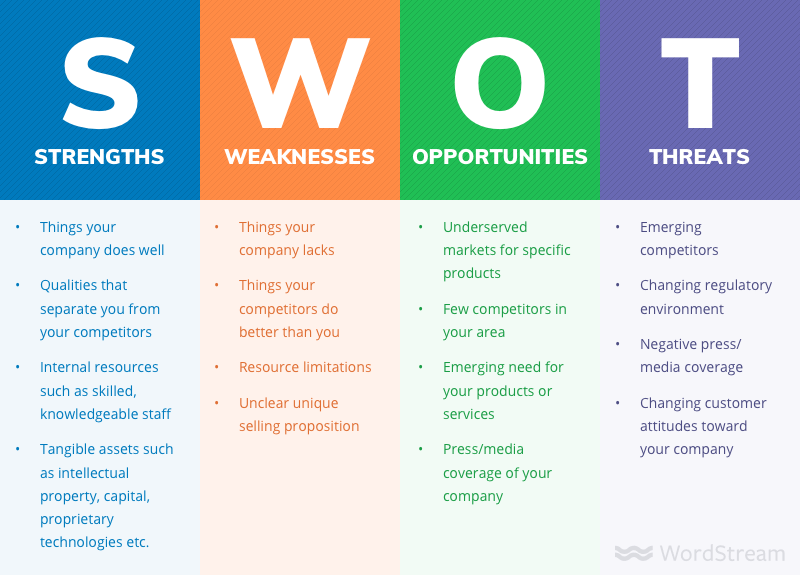
Credit: www.wordstream.com
Introduction To Swot Analysis
Understanding your business’s strengths and weaknesses is crucial. A SWOT analysis helps in this. It identifies internal and external factors affecting your business. Let’s dive into the details of SWOT analysis.
What Is Swot?
A SWOT analysis stands for Strengths, Weaknesses, Opportunities, and Threats. It is a strategic planning tool. This tool helps businesses understand their internal and external environment. Here is what each component means:
- Strengths: Positive attributes within your business. Things your company does well.
- Weaknesses: Areas where your business needs improvement. Internal factors that hinder performance.
- Opportunities: External factors that your business can capitalize on. Trends and market changes that favor your business.
- Threats: External factors that could harm your business. Competition and market changes that pose risks.
Importance Of Swot In Business
SWOT analysis offers many benefits. It helps in strategic planning. It aids in identifying key areas for growth and improvement. Here are some reasons why SWOT is important:
- Strategic Planning: Helps in setting achievable goals.
- Decision Making: Provides a clear picture for making informed decisions.
- Identifying Opportunities: Helps spot potential growth areas.
- Risk Management: Identifies potential threats, enabling preemptive actions.
Incorporating SWOT analysis into your business strategy is essential. It provides a comprehensive overview of your business environment. This leads to better planning and decision-making.
Example Table for SWOT Analysis:
| Category | Details |
|---|---|
| Strengths | Strong brand, loyal customer base, unique products |
| Weaknesses | Limited online presence, high production costs |
| Opportunities | Expanding market, new product lines, partnerships |
| Threats | Intense competition, economic downturns |
Strengths
Understanding your business’s strengths is crucial for growth. Strengths are internal factors that give your business an edge. This section will guide you in identifying and utilizing these strengths.
Identifying Strengths
Start by asking these questions:
- What do we do best?
- What unique resources do we have?
- What do customers love about us?
To make it easier, here’s a simple table:
| Question | Example Answer |
|---|---|
| What do we do best? | High-quality customer service |
| What unique resources do we have? | Experienced team |
| What do customers love about us? | Reliable products |
Gather input from your team. Use surveys or meetings. Everyone has a unique perspective. Document all strengths you identify.
Utilizing Strengths
Once identified, your next step is to utilize these strengths.
- Leverage strengths in marketing. Highlight unique aspects.
- Use strengths to improve processes. Strong areas can boost efficiency.
- Enhance customer experience. Focus on what customers value.
Here’s how to apply them:
- Marketing: Showcase your high-quality service in ads.
- Process Improvement: Use your experienced team to train new hires.
- Customer Experience: Promote your reliable products on social media.
Regularly review and update your strengths. Businesses evolve and so do their strengths. Stay ahead by knowing and using what makes you great.
Weaknesses
Understanding your business’s weaknesses is crucial for growth. A SWOT analysis helps you identify areas needing improvement. This section will guide you through spotting and addressing weaknesses in your business.
Spotting Weaknesses
Identifying weaknesses is the first step. Look at internal factors that hinder progress. These can include:
- Lack of expertise in a key area
- Poor financial health or cash flow issues
- Inadequate resources like outdated equipment
- Weak online presence or digital footprint
To spot weaknesses, use feedback from customers and employees. Conduct surveys or hold focus groups. Analyze performance metrics and compare them to industry standards.
Addressing Weaknesses
Once you identify weaknesses, create a plan to address them. This may involve:
- Investing in training for your team.
- Improving financial management practices.
- Upgrading equipment or technology.
- Enhancing your digital marketing efforts.
Addressing weaknesses can turn them into strengths. Here are some actions you can take:
| Weakness | Action |
|---|---|
| Poor customer service | Implement customer service training programs. |
| Outdated website | Redesign the website and optimize for SEO. |
| Limited product range | Expand your product line. |
By addressing weaknesses, you can improve your business’s overall performance. Regularly review and update your SWOT analysis to stay ahead.

Credit: www.semrush.com
Opportunities
Opportunities in a SWOT analysis are the external factors that your business can capitalize on. These are elements that can provide growth, success, and competitive advantage. Identifying and leveraging these opportunities can drive your business forward.
Finding Opportunities
Finding opportunities involves looking at various external factors that can benefit your business. Here are some ways to identify them:
- Market Trends: Keep an eye on emerging trends in your industry.
- Customer Needs: Understand what your customers want and need.
- Technological Advances: Use new technologies to improve your offerings.
- Competitor Weaknesses: Find gaps in your competitors’ strategies.
- Regulatory Changes: Stay updated with laws and regulations that can benefit you.
Leveraging Opportunities
Once you have identified opportunities, the next step is to leverage them effectively. Here are some strategies:
- Innovate: Use technology to create new products or services.
- Expand: Enter new markets or customer segments.
- Collaborate: Form partnerships with other businesses.
- Invest: Allocate resources to promising areas.
- Adapt: Be flexible and adjust your strategies as needed.
| Opportunity | Strategy |
|---|---|
| New Market Trends | Develop products to meet new demands |
| Technological Advances | Integrate new tech into your business |
| Competitor Weaknesses | Fill the gaps they leave open |
By identifying and leveraging opportunities, your business can achieve significant growth and success.
Threats
Understanding the Threats in a SWOT analysis is essential for business growth. Threats are external challenges that can hinder your business success. Recognizing and mitigating these threats can secure your business’s future.
Recognizing Threats
Identifying threats is a crucial first step. These can include new competitors, changing regulations, or economic downturns. Here are some common threats:
- Market Competition: New or existing competitors.
- Economic Changes: Recessions or inflation.
- Technological Advances: New technologies disrupting the industry.
- Regulatory Changes: New laws affecting your business.
- Supply Chain Issues: Problems with suppliers or logistics.
Use tools like PEST analysis to spot these threats early. Keeping an eye on market trends and industry reports can also help.
Mitigating Threats
Once threats are identified, the next step is mitigation. Here are some strategies:
- Risk Assessment: Evaluate the potential impact of each threat.
- Contingency Planning: Develop backup plans for critical threats.
- Strengthening Relationships: Build strong bonds with suppliers and partners.
- Innovation: Stay ahead by adopting new technologies.
- Regulatory Compliance: Stay updated with laws and regulations.
A SWOT analysis table can help visualize these strategies:
| Threat | Mitigation Strategy |
|---|---|
| Market Competition | Innovate products and services |
| Economic Changes | Diversify revenue streams |
| Technological Advances | Invest in RD |
| Regulatory Changes | Ensure compliance |
| Supply Chain Issues | Develop alternative suppliers |
By addressing threats proactively, businesses can navigate challenges smoothly.
Conducting A Swot Analysis
Conducting a SWOT analysis is crucial for understanding your business. It helps you identify your strengths, weaknesses, opportunities, and threats. This analysis gives a clear view of your business’s current state. It aids in making informed decisions and planning future strategies.
Step-by-step Guide
- Gather Your Team: Include people from different departments. Diverse perspectives ensure a comprehensive analysis.
- Identify Strengths: List what your business does well. Consider unique resources, skills, and advantages.
- Identify Weaknesses: Recognize areas where your business lacks. Note internal challenges and limitations.
- Spot Opportunities: Look for external chances to grow. Think about market trends, new technologies, and partnerships.
- Identify Threats: Identify external factors that could harm your business. Consider competition, market changes, and economic shifts.
- Create a SWOT Matrix: Organize your findings in a table. This helps visualize and compare each factor.
| Strengths | Weaknesses |
|---|---|
| Strong brand | Lack of resources |
| Skilled workforce | Poor online presence |
| Opportunities | Threats |
| Market expansion | New competitors |
| Technological advancements | Economic downturn |
Common Mistakes To Avoid
- Being Too Vague: Provide specific details. General statements lack clarity.
- Ignoring External Factors: Consider both internal and external elements. Focus on a balanced view.
- Not Updating Regularly: SWOT analysis should be ongoing. Regular updates keep it relevant.
- Overlooking Team Input: Involve your team. Multiple viewpoints enhance the analysis.
- Failing to Take Action: Use the results to make decisions. Actionable insights drive success.
Real-world Examples
Understanding SWOT analysis is easier with real-world examples. Here, we’ll explore two case studies. These examples will show how companies use SWOT analysis. They will help you apply it to your own business.
Case Study 1: Starbucks
Starbucks is a global coffee giant. Let’s see their SWOT analysis.
| Strengths | Weaknesses | Opportunities | Threats |
|---|---|---|---|
|
|
|
|
Starbucks has a strong brand and global presence. But, it faces high prices and intense competition. This SWOT analysis helps Starbucks find new opportunities.
Case Study 2: Apple Inc.
Apple Inc. is a tech leader. Let’s look at their SWOT analysis.
| Strengths | Weaknesses | Opportunities | Threats |
|---|---|---|---|
|
|
|
|
Apple’s strengths include innovation and a loyal customer base. Weaknesses are high prices and reliance on suppliers. This SWOT analysis helps Apple stay ahead in the market.

Credit: blog.hubspot.com
Implementing Insights
After conducting a SWOT analysis, the next step is implementing insights. This means taking the results and using them to drive your business forward. The insights gained can help shape strategies and improve operations.
Action Plans
Creating action plans is crucial for applying the insights from your SWOT analysis. Focus on leveraging your strengths and opportunities. Address weaknesses and threats with actionable steps. Use the table below for clarity:
| Area | Action | Responsible Party | Timeline |
|---|---|---|---|
| Strengths | Enhance customer service | Customer Service Team | Q1 2023 |
| Weaknesses | Improve supply chain | Operations Manager | Q2 2023 |
| Opportunities | Expand online presence | Marketing Team | Q3 2023 |
| Threats | Mitigate rising costs | Finance Department | Q4 2023 |
Monitoring Progress
Monitoring progress is essential to ensure your action plans are effective. Regular check-ins help track achievements. Adjust strategies if needed. Use the following steps for monitoring:
- Set clear milestones.
- Hold monthly review meetings.
- Use KPIs to measure success.
- Gather feedback from stakeholders.
- Adjust plans based on feedback.
Keep a close eye on both internal and external factors. This ensures your strategy stays relevant and effective.
Frequently Asked Questions
What Is A Simple Swot Analysis Of A Business?
A simple SWOT analysis evaluates a business’s Strengths, Weaknesses, Opportunities, and Threats. Strengths and Weaknesses are internal factors. Opportunities and Threats are external factors. This analysis helps identify areas for growth and improvement.
What Are The 5 Elements Of Swot Analysis?
SWOT analysis consists of five elements: Strengths, Weaknesses, Opportunities, Threats, and Trends. Strengths and weaknesses are internal factors. Opportunities and threats are external factors. Trends offer insights into future market directions.
What Is A Swot Analysis In Layman’s Terms?
A SWOT analysis identifies a business’s Strengths, Weaknesses, Opportunities, and Threats. It helps in strategic planning.
What Are 5 Examples Of Strength In Swot Analysis?
1. Strong brand recognition boosts customer trust and loyalty. 2. High employee expertise enhances productivity and innovation. 3. Advanced technology infrastructure improves operational efficiency. 4. Large, diverse customer base reduces market risks. 5. Robust financial health ensures stability and growth opportunities.
Conclusion
Mastering SWOT analysis can transform your business strategy. It helps identify strengths, weaknesses, opportunities, and threats. Implement these insights for better decision-making. Stay ahead of competitors by regularly updating your SWOT analysis. Start today and watch your business grow.